Event-Driven Systems: The Warning Signs That Tell You to Slow Down
Event-driven architecture solves real scaling problems, but it also adds consistency and debugging costs. Here's when not to reach for it first.
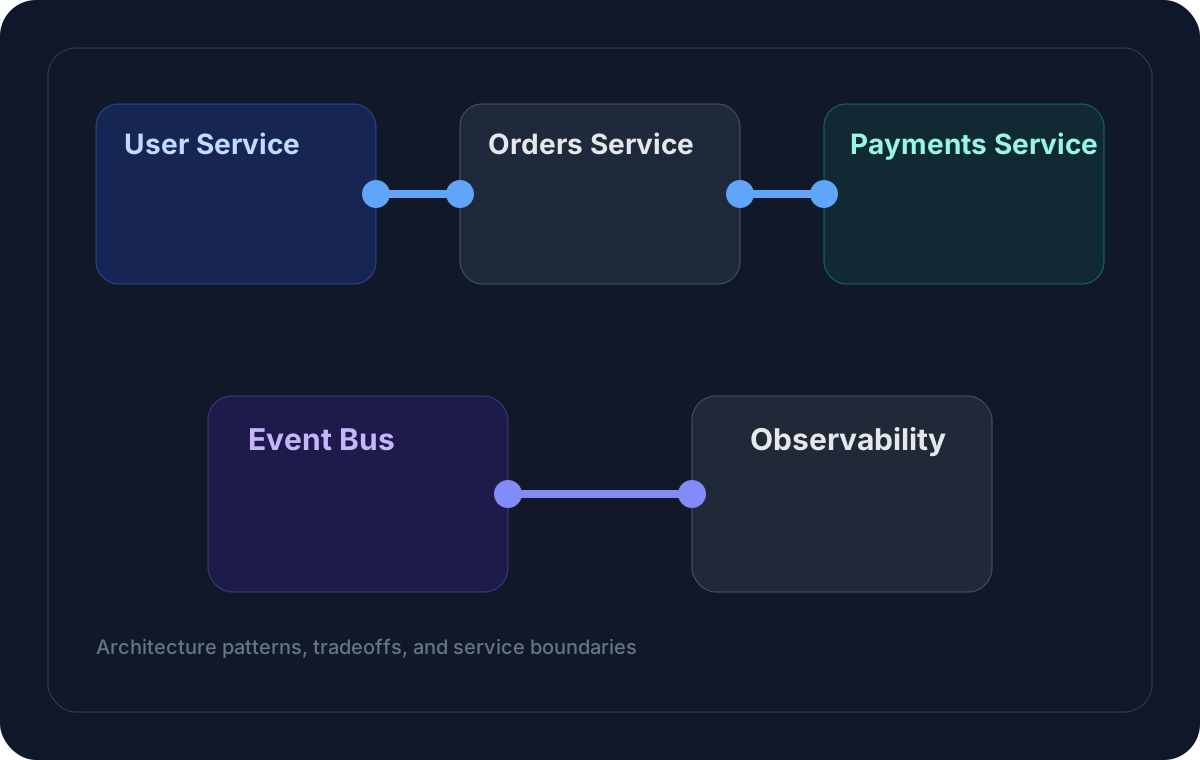
Events are excellent when teams need to decouple workflows, absorb spikes, or react to state changes asynchronously. They are less excellent when the business still expects immediate consistency across every step.
If every event requires a synchronous callback, a compensating manual fix, or a dashboard just to understand what happened, the architecture may be introducing complexity faster than it removes coupling.
Use events where delay is acceptable and ownership is clear. For core transactional paths, begin with the simplest consistency model that preserves correctness, then introduce async boundaries deliberately.
Written by
Akash Thanda